That Taste Map You Memorized in Grade School? Scientists Proved It Wrong Decades Ago
Walk into any middle school biology class, and you'll likely see it hanging on the wall: a colorful diagram of the human tongue, neatly divided into zones. Sweet at the tip, salty and sour along the sides, bitter at the back. For decades, this tongue map has been treated as established science, memorized by millions of American students.
There's just one problem: it's completely wrong.
The Translation That Launched a Million Textbooks
The tongue map traces back to 1901, when German scientist David Hänig published research on taste sensitivity across different areas of the tongue. His work was methodical and nuanced, showing slight variations in sensitivity to different tastes in different regions — but he never claimed that taste zones existed.
 Photo: David Hänig, via www.telegraph.co.uk
The trouble started in 1942, when psychologist Edwin Boring translated and summarized Hänig's work for an American audience. Boring's interpretation dramatically oversimplified the original findings, suggesting that distinct areas of the tongue were responsible for detecting specific tastes. This mistranslation made its way into textbooks, and by the 1960s, the tongue map had become standard curriculum across America.
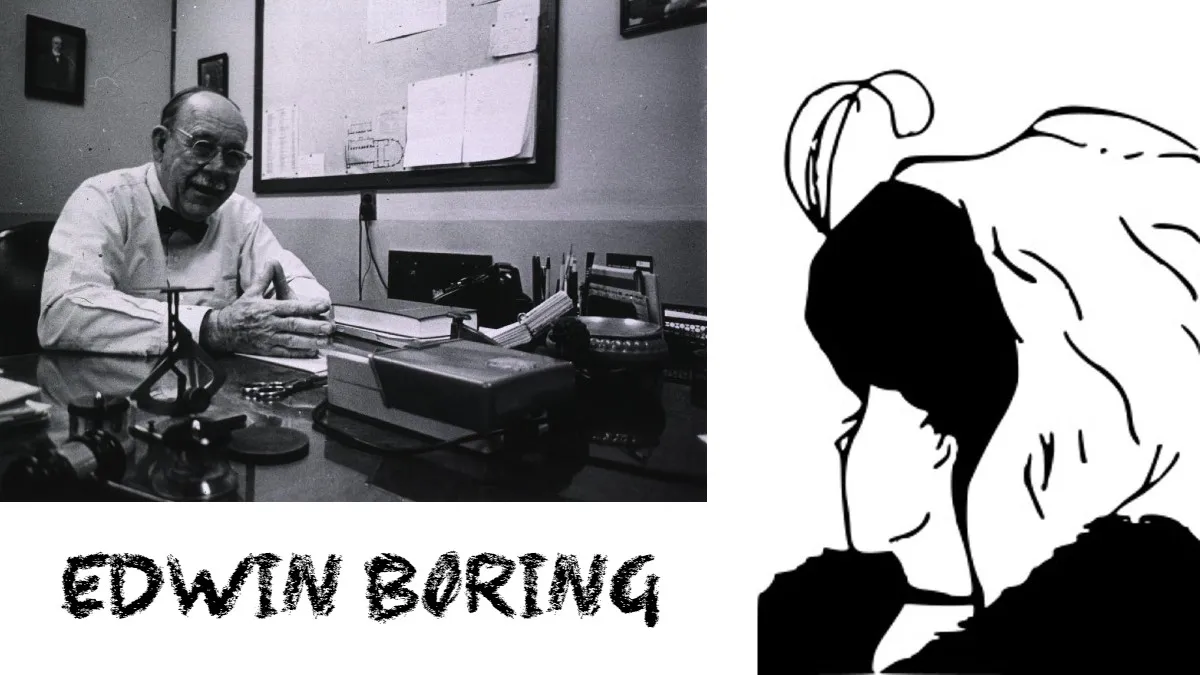 Photo: Edwin Boring, via i0.wp.com
"It's a perfect example of how scientific telephone works," explains Dr. Linda Bartoshuk, a taste researcher at the University of Florida. "Each retelling made the findings more definitive and less accurate."
 Photo: Dr. Linda Bartoshuk, via ysm-res.cloudinary.com
What Your Taste Buds Actually Do
Modern taste research paints a completely different picture. Using advanced imaging and molecular techniques, scientists have discovered that taste receptors for all five basic tastes — sweet, salty, sour, bitter, and umami — are distributed across the entire tongue.
Every taste bud contains multiple types of receptor cells, capable of detecting several different tastes. When you bite into a slice of pizza, taste receptors all over your tongue are simultaneously picking up the saltiness of the cheese, the sweetness of the tomato sauce, and the umami richness of the toppings.
The slight sensitivity differences that Hänig originally measured? They're real but minimal — nowhere near the dramatic zones depicted in classroom diagrams. The tip of your tongue might be marginally more sensitive to sweet tastes, but it's perfectly capable of detecting bitter flavors too.
Why the Myth Refuses to Die
Despite overwhelming scientific evidence against the tongue map, it continues to appear in textbooks, health websites, and even some medical references. The persistence reveals something uncomfortable about how educational myths spread and survive.
First, the tongue map is appealingly simple. It transforms the complex reality of taste perception into an easy-to-understand diagram that teachers can explain in five minutes. In a world where educators are pressed for time and students are overwhelmed with information, simplification often wins over accuracy.
Second, correcting established educational content is surprisingly difficult. Textbook publishers are reluctant to overhaul chapters that "work" from a pedagogical standpoint, especially when the correction requires explaining more complex concepts. The tongue map might be wrong, but it's wrong in a way that's easy to teach and test.
The Real Story of Taste
Actual taste perception is far more sophisticated than any simple map could capture. Your sense of taste involves not just your tongue, but also your sense of smell, the texture of food, its temperature, and even your expectations and memories.
When wine experts talk about detecting "notes" of vanilla or chocolate, they're not using special tongue zones — they're integrating signals from thousands of taste and smell receptors working together. The brain combines all this information into the rich, complex experience we call flavor.
This complexity is actually good news for anyone who's ever worried about their taste preferences. There's no "correct" way for your tongue to work, because taste perception varies enormously between individuals based on genetics, age, health, and experience.
Testing the Truth Yourself
You can easily disprove the tongue map at home. Place a small amount of salt on the "sweet zone" at the tip of your tongue, or try detecting sweetness at the supposedly bitter-only back of your tongue. You'll quickly discover that your entire tongue is capable of detecting all tastes.
This simple experiment raises a larger question: if something this basic and easily testable remained wrong in textbooks for decades, what other "established facts" might be worth questioning?
The Lesson Beyond Taste
The tongue map myth reveals how scientific misinformation can become entrenched in education, persisting long after researchers have moved on. It's a reminder that even seemingly fundamental facts deserve occasional skepticism — and that the real story behind what we think we know is often more interesting than the simplified version we learned in school.
Your taste buds, it turns out, are far more capable and complex than that old classroom diagram ever suggested.