The Hydration Obsession Ignores Where Most of Your Daily Water Actually Comes From
The Water Bottle Revolution That Changed Everything
Walk through any American office, gym, or college campus and you'll see them everywhere: people clutching water bottles, tracking their intake on apps, and dutifully working toward their daily hydration goals. The message is clear and constant — drink more water, stay hydrated, hit your numbers.
 Photo: American office, via www.tedesk.com
But this obsession with conscious hydration is historically bizarre. For most of human existence, people managed their fluid intake without tracking, measuring, or carrying water everywhere they went. They relied on something much simpler and more reliable: thirst.
The Hidden Source of Daily Hydration
Here's what the hydration industry doesn't advertise: a significant portion of your daily fluid intake doesn't come from drinking at all. According to the National Academy of Medicine, about 20% of daily fluid intake comes from food. For someone who needs 2.7 liters of fluid daily (the recommendation for women), that's more than two full cups of water from food alone.
 Photo: National Academy of Medicine, via www.cuimc.columbia.edu
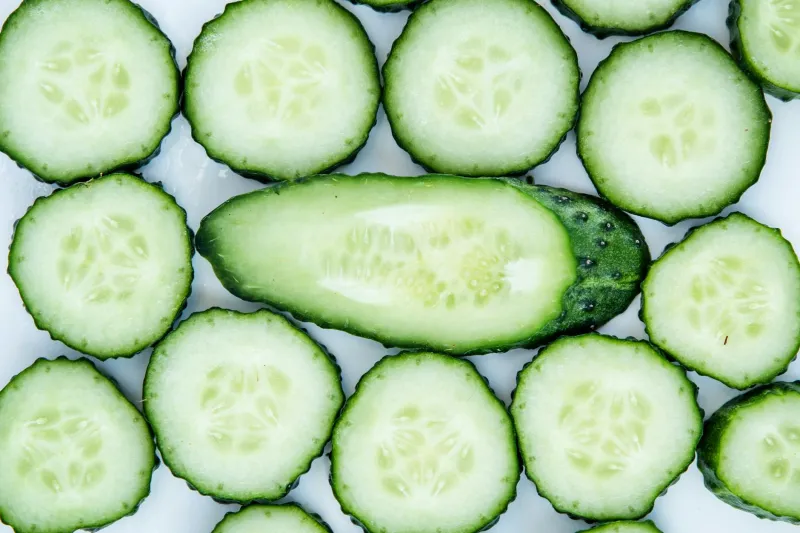
Fruits and vegetables are obvious sources — watermelon is 92% water, cucumbers are 95% water, and oranges are 87% water. But even foods you wouldn't consider "wet" contribute meaningfully to hydration. Bread is about 35% water, cheese is roughly 40% water, and meat can be 60-70% water depending on the cut and preparation.
Your morning oatmeal, lunch soup, afternoon yogurt, and dinner pasta all count toward hydration. The milk in your cereal, the tomatoes in your sandwich, even the lettuce on your burger — they're all delivering water to your system alongside nutrients.
How Your Body Actually Manages Water
The human body has sophisticated mechanisms for tracking and regulating fluid balance that developed over millions of years of evolution. Your kidneys constantly monitor blood volume and concentration, adjusting urine output accordingly. When you need more fluid, you feel thirsty. When you have enough, the sensation disappears.
This system is remarkably precise. Your kidneys can concentrate or dilute urine across a wide range depending on your body's needs. They respond to changes in blood pressure, hormone levels, and cellular hydration status. The whole process happens automatically, without any conscious tracking or calculation.
Yet somehow, the modern hydration movement has convinced millions of people that this ancient biological system can't be trusted. Instead of listening to thirst, we're supposed to drink according to predetermined schedules and hit arbitrary numerical targets.
The Birth of Hydration Anxiety
The transformation of hydration from a biological function into a performance metric didn't happen overnight. It required several cultural shifts working together.
First, the bottled water industry needed to create demand for a product that flows freely from taps. Marketing campaigns in the 1980s and 1990s positioned bottled water as purer, safer, and more convenient than tap water. But selling convenience wasn't enough — they needed to sell necessity.
Enter the idea that most people are chronically dehydrated without realizing it. This concept, promoted through wellness blogs, fitness influencers, and even some medical professionals, suggested that thirst was an unreliable signal that kicked in too late. By the time you felt thirsty, you were supposedly already dehydrated.
The rise of fitness tracking technology amplified this message. Apps and devices that could monitor steps, heart rate, and sleep cycles naturally expanded into hydration tracking. Suddenly, water intake became another metric to optimize, another number to hit for peak performance.
What Dehydration Actually Looks Like
True dehydration is not a subtle condition that sneaks up on healthy people going about their daily lives. It's a medical emergency with clear, unmistakable symptoms: dark yellow urine, dizziness, rapid heartbeat, confusion, and extreme fatigue.
Mild dehydration, the kind that might affect athletic performance or cognitive function, still produces noticeable symptoms well before it becomes dangerous. You'll feel thirsty, your mouth might feel dry, and your urine will be darker than usual. These are signals, not failures of your biological system.
The idea that you need to drink before you feel thirsty applies mainly to specific situations: intense exercise, hot weather, illness with fever or vomiting, or certain medical conditions that affect thirst sensation. For healthy people in normal conditions, thirst remains an excellent guide to fluid needs.
The Psychology of Hydration Performance
Tracking water intake can create the same psychological patterns as other forms of health monitoring — turning a natural process into a source of anxiety and self-judgment. People worry about falling behind on their water goals, feel guilty about choosing coffee over water, and experience stress when they can't access their preferred beverages.
This mindset treats the body like a machine that needs precise inputs rather than a biological system with built-in regulation. It's the same thinking that leads people to eat by the clock rather than when hungry, or to force themselves to sleep exactly eight hours regardless of how they feel.
The irony is that stress and anxiety can actually affect hydration status. Chronic stress impacts kidney function and hormone levels, potentially disrupting the very fluid balance that people are trying to optimize through careful tracking.
Trusting Your Biological Wisdom
This doesn't mean hydration is irrelevant or that water intake never matters. If you're exercising intensely, spending time in hot weather, or dealing with illness, you may need to drink more intentionally. Older adults sometimes experience decreased thirst sensation and may benefit from more conscious hydration efforts.
But for most healthy adults in normal conditions, the solution is simpler than any app or tracking system: drink when you're thirsty, eat a varied diet that includes fruits and vegetables, and trust that your body knows what it's doing.
Your kidneys have been keeping humans alive for millennia without spreadsheets, notifications, or performance targets. Sometimes the most advanced health strategy is remembering that your body already comes with the technology it needs.
Beyond the Bottle
The next time you see someone frantically trying to finish their daily water quota, remember that hydration is bigger than the liquid in their bottle. It's happening at every meal, with every piece of fruit, in every cup of coffee or tea. The human body is constantly managing fluid balance through systems more sophisticated than any fitness tracker.
Maybe the real story isn't about drinking more water. Maybe it's about trusting the biological wisdom that got us this far, and recognizing that some of our newest health obsessions are solutions to problems that didn't exist until we created them.