We Debunked the Left Brain / Right Brain Myth — Then Replaced It With Another One
The Myth You Thought You Already Fixed
At some point in the last decade, a lot of people got the memo: left brain / right brain dominance is a myth. Creative people aren't running on their right hemisphere. Analytical thinkers aren't locked into their left. The whole framework, which spawned a small industry of personality quizzes, self-help books, and corporate team-building exercises, turned out to be a dramatic oversimplification of how the brain actually works.
So far, so good. But here's where things get interesting.
The correction that most people absorbed — the one you'll hear in science podcasts and classroom explainers — goes something like this: We actually use all of our brain all the time. It sounds tidy. It sounds like the sensible antidote to the myth. And it's not exactly wrong, but it's not quite right either. The real picture is more nuanced, and honestly, more fascinating than either version of the story.
Where the Left / Right Story Came From
The left brain / right brain framework has real scientific roots, which is part of why it stuck around so long. In the 1960s, neuropsychologist Roger Sperry conducted groundbreaking research on patients who had undergone a procedure called corpus callosotomy — a surgery that severed the bundle of nerve fibers connecting the brain's two hemispheres. These were people with severe epilepsy, and cutting that connection helped control their seizures.
 Photo: Roger Sperry, via cdn.achology.com
What Sperry found was remarkable. When the two hemispheres couldn't communicate, they sometimes behaved like separate cognitive systems. The left hemisphere, in most people, handled language and logical reasoning. The right was better at spatial tasks and recognizing faces. Sperry won a Nobel Prize for this work in 1981, and the science was legitimate.
 Photo: Nobel Prize, via www.aljazeera.com
The problem came when that nuanced, specific finding got translated into popular culture. By the time it reached self-help books and magazine quizzes, it had morphed into the idea that each person was fundamentally dominated by one hemisphere — that you were either a left-brained logical type or a right-brained creative soul. That leap from 'the hemispheres have different strengths' to 'you live in one of them' was never supported by the research.
So Do We Really Use All of Our Brain?
Here's where the popular correction runs into its own trouble.
The 'we use 100% of our brain' framing is meant to push back against the even older myth that humans only use 10% of their brains (a separate piece of neuroscience folklore with its own messy history). And in a broad sense, it's accurate — over the course of a day, essentially all brain regions are active at some point, and no large section of healthy brain tissue just sits permanently idle.
But that's very different from saying all regions are equally active all the time, doing the same work simultaneously. They're not.
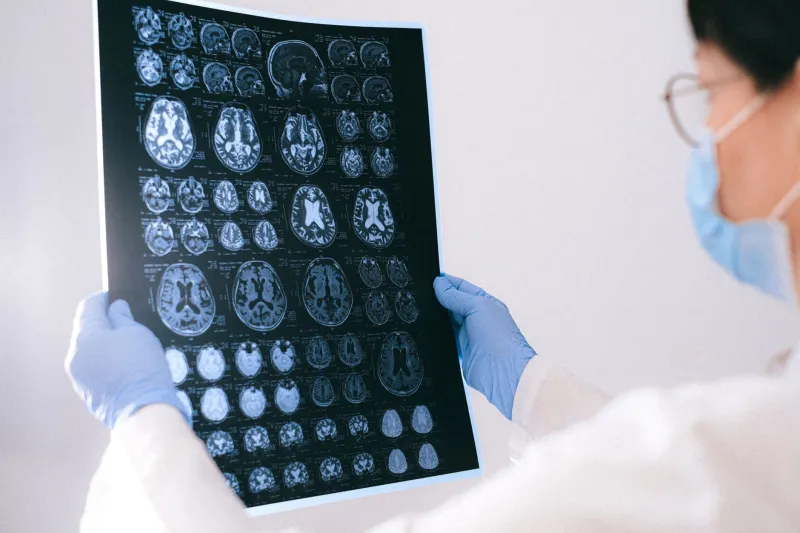
Brain imaging technology — particularly fMRI scans, which measure blood flow as a proxy for neural activity — consistently shows that different tasks light up different regions more than others. When you're reading, language-processing areas in the left hemisphere are more active. When you're navigating a new neighborhood, regions involved in spatial reasoning, including parts of the right hemisphere and the hippocampus, are doing heavier lifting. When you're recognizing a friend's face, your fusiform face area is especially engaged. The brain is constantly shifting which regions are doing the most work depending on what you're asking it to do.
Neuroscientists call this functional specialization, and it's one of the most well-documented features of how the brain operates. It doesn't mean you're a 'left-brained person.' But it does mean the brain is far from a uniform, always-equally-active organ.
The More Honest Middle Ground
What brain imaging actually reveals is something more like an orchestra than a light switch. Different sections of the brain are more or less engaged depending on the task — and they're almost always working together across both hemispheres, not operating independently. Even tasks we tend to associate with one side of the brain involve complex coordination across regions on both sides.
Take language, often cited as the classic left-hemisphere function. It's true that for most right-handed people, core language processing leans left. But understanding the emotional tone of what someone is saying, getting the humor in a joke, or following a complicated narrative — those tasks recruit right hemisphere regions too. The left side handles a lot of the syntax and vocabulary. The right side contributes to context and meaning. You need both.
Similarly, creativity — the supposed domain of right-brain thinkers — doesn't show up in scans as a single-hemisphere phenomenon. Creative thinking tends to activate a broad network of regions, including parts of the prefrontal cortex, the default mode network, and yes, areas on both sides of the brain.
Why the Oversimplification Persists
Both versions of this story — the original myth and the overcorrected replacement — survive for the same reason most misconceptions do: they're simple, and simple is satisfying.
'You're a right-brained creative' gives people an identity. 'We use all of our brain' gives people a clean takeaway. Neither requires sitting with the messier truth that the brain is a highly specialized, deeply interconnected system that doesn't map neatly onto personality types or motivational posters.
The 'all of the brain all the time' framing also gets repeated because it sounds like the responsible scientific answer. It feels like the opposite of the myth, so it must be the correction. But in science, the opposite of an oversimplification is rarely another oversimplification — it's usually more complexity.
The Takeaway
The left brain / right brain personality framework was always more marketing than neuroscience. But replacing it with 'we use all of our brain equally' trades one misleading idea for another. What's actually true is that the brain is a regionally specialized, highly coordinated system — different areas genuinely do different things, and different tasks genuinely engage different regions more heavily. That's not a myth. That's just how it works. And it turns out that's a far more interesting story than either version you've probably heard before.