Flight Prices Aren't Chaos — They're a Carefully Engineered Trap (And You Can Learn the Rules)

Flight Prices Aren't Chaos — They're a Carefully Engineered Trap (And You Can Learn the Rules)
You've been there. You check a flight, decide to think about it, come back two hours later, and the price has jumped $80. You refresh again. It goes back down. You don't book because maybe it'll drop further, and then the next morning it's $200 higher than when you started. You end up paying more than you would have if you'd just bought the ticket the first time you saw it.
This experience feels random. It isn't. What you're bumping up against is one of the most sophisticated pricing systems ever built for a consumer product — and it was designed, quite deliberately, to make you feel exactly that confused.
The System That Changed Flying Forever
To understand why flight prices behave the way they do, you have to go back to 1978. That's when the Airline Deregulation Act passed, removing the federal government from the business of setting airfares. Before deregulation, prices were stable and predictable because regulators set them. After deregulation, airlines suddenly had to figure out how to compete on price — and how to do it without losing money on half-empty planes.
American Airlines solved this problem in the early 1980s with a system they called yield management (later called revenue management). The basic idea was this: a seat on a plane is a perishable product. Once the plane takes off, an empty seat generates zero revenue — forever. So the goal isn't to sell every seat at the highest possible price. It's to sell every seat at the highest price that particular customer is willing to pay.
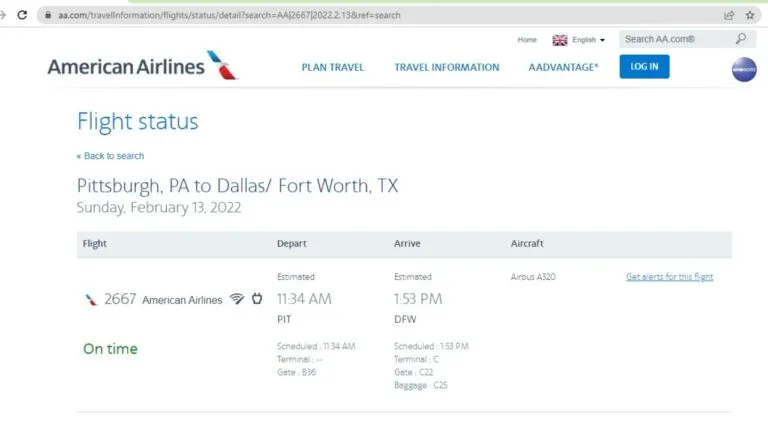 Photo: American Airlines, via aviatechchannel.com
To do that, American's team — led by a revenue strategist named Robert Crandall — built a system that divided the cabin into invisible pricing buckets. The same seat could be sold at dozens of different price points depending on who was buying, when they were buying, and what other seats had already sold. The algorithm was constantly recalculating, adjusting prices in real time based on demand signals.
 Photo: Robert Crandall, via alchetron.com
By 1992, the Harvard Business Review estimated that yield management was generating American Airlines roughly $500 million in additional annual revenue. Every major carrier copied the approach within a decade. The system you're fighting today when you try to book a flight is a direct descendant of that 1980s algorithm — just vastly more sophisticated, running on modern machine learning rather than spreadsheets.
 Photo: Harvard Business Review, via cdn.sanity.io
Why the "Tuesday Rule" Became a Thing (And Why It's Mostly Wrong)
At some point in the early 2000s, a travel tip started circulating: book flights on Tuesday afternoons to get the best prices. The logic, as it was usually explained, was that airlines released sale fares on Monday nights, competitors matched them by Tuesday morning, and by Tuesday afternoon you had the lowest prices of the week.
There was a brief window in time — probably around 2002 to 2008 — when this was loosely true. Airlines did tend to publish promotional fares early in the week. Travel writers picked up on the pattern, wrote about it, and the "Tuesday rule" became gospel.
But airlines noticed. When millions of travelers start booking on the same day of the week, the pricing algorithm picks up on the demand signal and adjusts accordingly. The Tuesday discount, to the extent it ever reliably existed, was largely arbitraged away by the very coverage that made it famous. Multiple large-scale analyses of airfare data in recent years — including work done by Google Flights and independent travel research firms — have found no consistent day-of-week effect that holds up across routes, seasons, and carriers.
What the data does show is messier and more useful: advance purchase timing matters, but not in a simple linear way. Prices tend to be highest very close to departure (when business travelers are buying last-minute) and very far out (when airlines haven't yet discounted unsold inventory). The lowest prices for domestic flights typically appear in a window somewhere between three weeks and three months before departure, with the sweet spot varying significantly by route and season.
What the Algorithm Is Actually Measuring
Modern airline pricing systems are tracking signals that most travelers never think about. They're watching how fast seats in each pricing bucket are selling compared to historical data for that route. They're monitoring what competitors are charging. They're factoring in local events at the destination, seasonal demand curves, and even — according to some reports — whether you've searched for a route before (which is why clearing your browser cookies before booking is advice you've probably heard, though airlines officially deny using individual browsing history to set prices).
They're also segmenting customers. The core insight of yield management is that business travelers and leisure travelers have fundamentally different price sensitivities. A business traveler booking three days out for a Monday morning meeting will pay almost anything. A family planning a vacation six months away is highly price-sensitive and will comparison-shop extensively. The system is designed to charge each group roughly the maximum they'll tolerate — which is why the same seat can have a $180 price tag in January and a $620 price tag in March.
What Actually Helps (A Little)
None of this means you're powerless. It just means the leverage points are different from what most travel advice suggests.
Flexibility is your biggest asset. If you can shift your travel dates by even two or three days, fare comparison tools like Google Flights' calendar view can show you significant price differences. Flying on a Tuesday or Wednesday rather than a Friday or Sunday often does save money — not because of when you book, but because of when you fly. Those are lower-demand travel days.
Setting price alerts is more effective than timing your search. Tools like Google Flights, Hopper, and Kayak's price alerts let the algorithm work for you instead of against you. You set a target price, and you get notified if the fare drops to that level.
Booking directly through the airline versus a third-party site matters less for price than most people think, but it matters a lot for customer service if something goes wrong.
And perhaps most practically: stop refreshing. The anxiety loop of checking prices repeatedly rarely results in a better deal. It mostly results in you convincing yourself the price is about to drop when the algorithm has no such intention.
The Takeaway
Airline pricing isn't random, and it isn't fair — but it is logical once you understand the system behind it. The prices you see are the output of a machine that has been refined for 40 years with one goal: extracting the maximum amount of money from each individual traveler. The Tuesday booking tip and most other folk wisdom about airfare are either outdated, oversimplified, or simply wrong. What actually helps is flexibility, price alerts, and a realistic understanding of when the system is likely to work in your favor.