The Brain Quiz That Split America Into Two Types of People — But Never Had Any Real Science Behind It
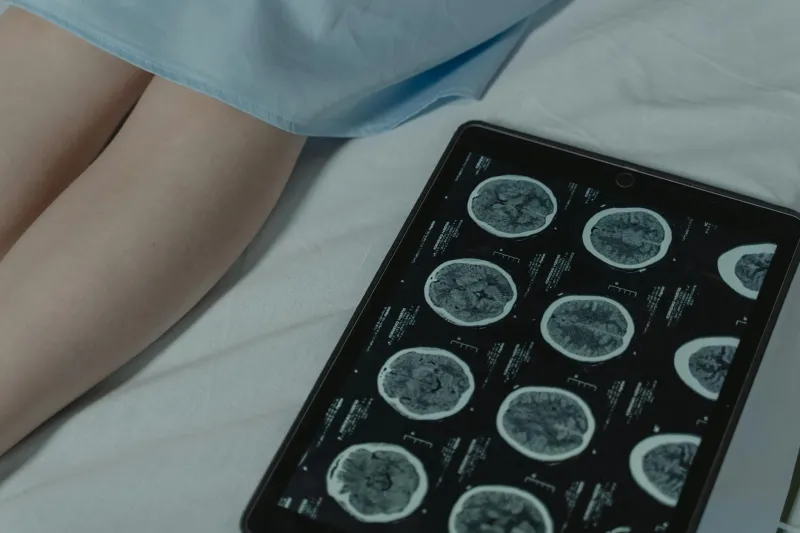
The Quiz That Defined a Generation
Walk into any American office in the past 30 years, and you've probably encountered someone who proudly declares themselves a "left-brain person" — logical, analytical, detail-oriented. Or maybe they're a "right-brain type" — creative, intuitive, big-picture focused. This personality framework became so embedded in our culture that it spawned countless quizzes, team-building exercises, and even career guidance programs.
The only problem? It's complete nonsense.
Modern neuroscience has thoroughly debunked the idea that people can be categorized as left-brained or right-brained personalities. Brain imaging studies consistently show that both hemispheres work together on virtually every cognitive task, from solving math problems to creating art. The real story of how this myth took hold reveals something fascinating about how genuine scientific discoveries can be twisted into pop psychology gold mines.
Where the Split-Brain Story Actually Started
The left-brain/right-brain concept does have roots in legitimate science — just not the kind that supports personality typing. In the 1960s, researchers Roger Sperry and Michael Gazzaniga studied patients who had undergone split-brain surgery, a rare procedure that severs the connection between the brain's two hemispheres to treat severe epilepsy.
These patients provided unique insights into how each hemisphere processes information. The left hemisphere typically handles language and sequential processing, while the right hemisphere excels at spatial awareness and pattern recognition. Sperry even won a Nobel Prize for this groundbreaking research.
But here's the crucial detail that got lost in translation: these findings applied only to people whose brains had been surgically altered. In healthy brains, the two hemispheres communicate constantly through a thick bundle of nerve fibers called the corpus callosum.
The Pop Psychology Gold Rush
Sometime in the 1970s, this nuanced scientific research got hijacked by the self-help industry. Books like "Drawing on the Right Side of the Brain" by Betty Edwards and "Left Brain, Right Brain" by Sally Springer became bestsellers by promising readers they could unlock their hidden creative potential or sharpen their analytical skills.
Corporate trainers loved the concept because it offered a simple way to categorize employees and explain workplace dynamics. Team-building seminars began sorting participants into left-brain and right-brain groups, with the assumption that understanding your "brain type" would improve communication and productivity.
The appeal was obvious: in a complex world, people craved simple explanations for their strengths, weaknesses, and career choices. The left-brain/right-brain framework provided an instantly understandable way to make sense of human differences.
What Brain Scans Actually Reveal
When researchers started using fMRI and PET scans to observe healthy brains in action, the left-brain/right-brain personality theory crumbled. A 2013 study from the University of Utah analyzed brain scans from over 1,000 people and found no evidence that individuals preferentially use one hemisphere over the other.
Whether someone was solving math problems, writing poetry, or recognizing faces, both sides of their brain lit up with activity. Creative tasks activated analytical regions, and logical problems engaged areas associated with intuition and pattern recognition.
"The truth is that creativity, analytical thinking, and most other cognitive abilities require networks that span both hemispheres," explains Dr. Jeff Anderson, the study's lead author. "The idea that people can be 'left-brained' or 'right-brained' is one of those myths that sounds scientific but isn't supported by the data."
Why the Myth Refuses to Die
Despite decades of contradicting evidence, the left-brain/right-brain personality framework remains stubbornly popular. Online quizzes still promise to reveal your "brain type," and job interviews occasionally include questions about whether you're more logical or creative.
The persistence makes sense when you consider what the myth provides: a flattering way to explain your limitations ("I'm just not a math person — I'm right-brained!") and a scientific-sounding justification for your strengths ("Of course I'm good at analysis — I'm left-brained!").
The framework also taps into our love of binary categories. Americans especially seem drawn to personality systems that sort people into distinct types — think Myers-Briggs, love languages, or zodiac signs. The left-brain/right-brain model offers the same satisfying simplicity with an added veneer of neuroscientific credibility.
The Real Story Is More Interesting
The actual science of how brains work is far more fascinating than any personality quiz result. Rather than operating as separate logical and creative modules, your brain functions as an incredibly sophisticated network where different regions collaborate in ways scientists are still discovering.
When you solve a problem, write a story, or even just have a conversation, millions of neurons across both hemispheres fire in complex patterns. What makes you unique isn't which side of your brain dominates — it's the specific way these networks develop and connect based on your experiences, genetics, and learning.
The Takeaway
The next time someone asks if you're left-brained or right-brained, you can confidently answer: "Neither — I'm whole-brained, just like everyone else." The real story of human cognition is that we're all using our entire brains to navigate the world, and that's far more remarkable than any personality category could capture.
The left-brain/right-brain myth might make for entertaining team-building exercises, but understanding how your brain actually works — as an integrated, adaptable network — is both more accurate and more empowering than any quiz result could ever be.