Corporate HR Departments Still Use 'Left Brain vs Right Brain' Tests — Even Though Neuroscience Debunked This Decades Ago

The Personality Test That Won't Die
Somewhere in a conference room right now, a job candidate is filling out a questionnaire asking whether they're more "analytical" or "creative," whether they prefer "logic" or "intuition," and whether they think in "words" or "pictures." The results will supposedly reveal whether they're a "left-brained" or "right-brained" person — information that some hiring managers still believe predicts job performance.
There's just one problem: neuroscience abandoned this neat division of mental labor decades ago. Modern brain imaging shows that virtually all cognitive tasks — from solving math problems to writing poetry — engage networks spanning both hemispheres. Yet the left brain/right brain framework has proven remarkably resistant to scientific evidence, continuing to influence hiring decisions, team-building exercises, and self-help philosophies across corporate America.
From Medical Observation to Pop Psychology Gold Mine
The left brain/right brain concept has legitimate scientific roots, which helps explain why it gained traction in the first place. In the 1960s, researcher Roger Sperry studied patients who had undergone corpus callosotomy — a surgical procedure that severs the connection between brain hemispheres to treat severe epilepsy. His work revealed that the hemispheres do have some specialized functions.
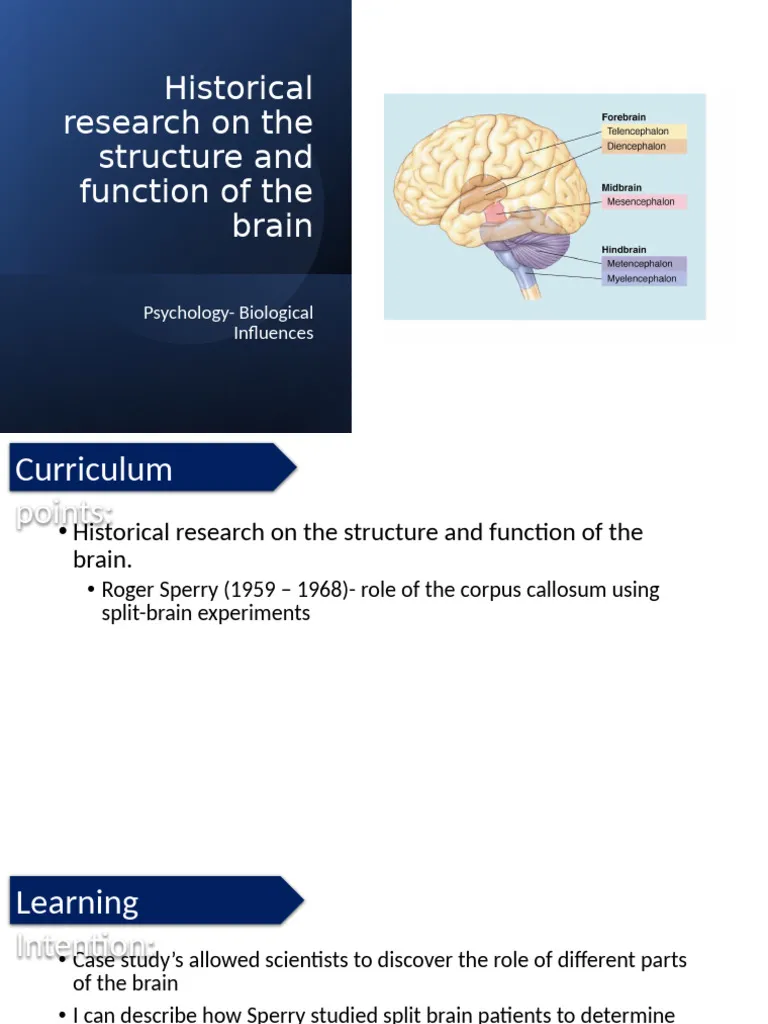 Photo: Roger Sperry, via imgv2-2-f.scribdassets.com
Sperry's research showed that the left hemisphere typically handles language processing and sequential reasoning, while the right hemisphere excels at spatial processing and pattern recognition. This was groundbreaking neuroscience that earned Sperry a Nobel Prize in 1981.
But somewhere between the laboratory and the corporate training room, these nuanced findings got steamrolled into a simplistic personality typology. The idea that people could be categorized as fundamentally "left-brained" (logical, analytical, mathematical) or "right-brained" (creative, artistic, intuitive) was born not from Sperry's careful research, but from popular psychology books and workplace consultants looking for easy ways to explain human differences.
What Brain Scans Actually Show About Creativity and Logic
Modern neuroimaging technology has given scientists an unprecedented look at how healthy brains actually work during different tasks. The results consistently contradict the left brain/right brain personality model.
When neuroscientist Arne Dietrich reviewed decades of brain imaging studies on creativity, he found that creative thinking involves complex networks distributed across both hemispheres. Mathematical reasoning, supposedly the domain of the "left brain," actually activates regions throughout the entire brain. Even language processing, while more concentrated in the left hemisphere, involves right-hemisphere contributions for understanding context, metaphor, and emotional tone.
A 2013 University of Utah study examined brain scans from over 1,000 people and found no evidence that individuals have stronger left or right hemisphere networks. The researchers concluded that while certain functions may be lateralized, people don't have dominant hemispheres that determine their thinking style.
Dr. Jeff Anderson, the study's lead author, put it bluntly: "It's absolutely true that some brain functions occur in one or the other side of the brain. Language tends to be on the left, attention more on the right. But people don't tend to have a stronger left- or right-sided brain network."
 Photo: Jeff Anderson, via c8.alamy.com
Why HR Departments Keep Buying Into Debunked Science
Despite overwhelming scientific evidence against hemisphere dominance, left brain/right brain assessments remain popular in corporate settings. A quick search of business training websites reveals dozens of companies offering "brain-based" personality tests for team building and hiring decisions.
Part of the appeal is practical: managers want tools to understand their employees and make hiring decisions. The left brain/right brain framework offers a simple way to categorize people and predict their strengths. It feels scientific enough to justify using, but simple enough for anyone to understand and apply.
There's also a confirmation bias factor at play. People who consider themselves logical might score as "left-brained" on these tests and feel validated. Those who see themselves as creative might embrace their "right-brained" identity. The framework provides a flattering explanation for why someone excels in certain areas while struggling in others.
The persistence of this myth also reflects a broader problem with how scientific information gets translated into workplace practices. Once an idea becomes embedded in corporate training materials and management philosophies, it can continue circulating long after the science has moved on.
The Real Science of Individual Differences
While the left brain/right brain personality model is scientifically bankrupt, genuine individual differences in thinking styles do exist. Cognitive psychologists have identified more nuanced and evidence-based ways to understand how people process information differently.
Some people are more field-dependent (influenced by context) while others are field-independent (focused on details). Some prefer systematic thinking while others excel at empathizing. Some are more comfortable with ambiguity while others prefer clear structure. These differences are real and measurable, but they don't map onto brain hemispheres.
Personality psychology has also developed sophisticated models like the Big Five that predict workplace behavior far better than any left brain/right brain assessment. These frameworks are based on decades of research and actually correlate with job performance in ways that hemisphere dominance tests don't.
What This Means for Your Next Job Interview
If you encounter a left brain/right brain assessment during a hiring process, you're dealing with an organization that hasn't updated its practices to match current scientific understanding. This doesn't necessarily make them a bad employer, but it does suggest they might be using other outdated methods for evaluating candidates.
The good news is that these tests are generally harmless — they're not measuring anything real about your cognitive abilities, so there's no "wrong" way to answer. The bad news is that some managers might actually use the results to make decisions about your fit for certain roles.
For hiring managers still using these assessments, it's worth asking: what exactly are you trying to measure, and are there more valid ways to assess those qualities? If you want to know whether someone can think analytically, give them an analytical problem to solve. If you want to assess creativity, look at their portfolio or ask them to generate novel solutions to real challenges.
The Bigger Picture: When Convenient Myths Outlive Inconvenient Facts
The left brain/right brain story illustrates a broader phenomenon in how scientific ideas get adopted and persist in popular culture. Simple, intuitive explanations often have more staying power than complex, nuanced ones — even when the simple explanations turn out to be wrong.
This pattern repeats across many domains: the idea that we only use 10% of our brains, the belief that learning styles require matching teaching methods, the notion that sugar makes kids hyperactive. All have been thoroughly debunked by research, yet all continue influencing decisions in schools, workplaces, and homes.
The persistence of the left brain/right brain myth in corporate settings reveals how slowly evidence-based practices penetrate organizational culture. It's a reminder that just because an idea sounds scientific doesn't mean it actually is — and that the most enduring myths are often those that tell us something flattering about ourselves or offer simple solutions to complex problems.
Next time you see a "brain-based" personality assessment, remember: your brain is far more interesting and integrated than any simple left-right division could capture.