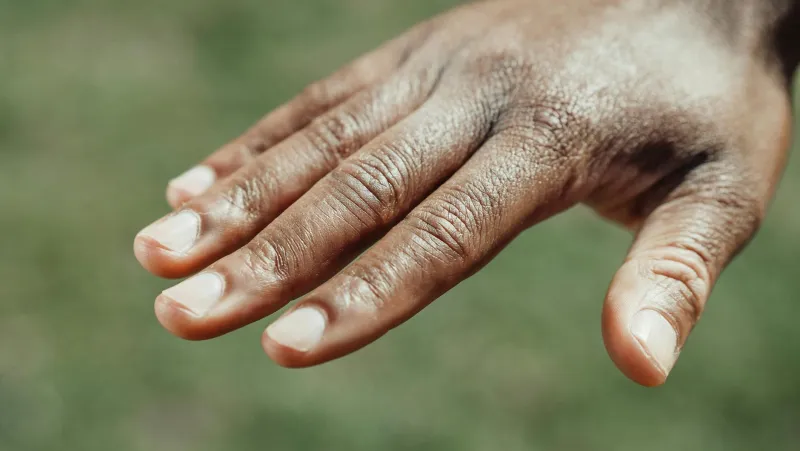
The Warning Every Kid Has Heard
If you've ever cracked your knuckles in front of an adult, you've probably heard the warning: "Stop that — you'll get arthritis." This piece of medical wisdom gets passed down like gospel in American households, repeated by parents, teachers, and even some healthcare providers. The threat feels real enough that many people develop genuine anxiety about the habit.
But here's the thing: no legitimate medical study has ever established a connection between knuckle cracking and arthritis. In fact, one particularly dedicated doctor spent six decades conducting the most thorough experiment possible — using his own hands as test subjects.
The Doctor Who Cracked the Case
Dr. Donald Unger, a California physician, grew tired of hearing his mother and aunts warn him about knuckle cracking throughout his childhood. Rather than simply accepting or dismissing their concerns, he decided to settle the matter scientifically. Starting in his youth, Unger began a controlled experiment that would last over 60 years.
His methodology was elegantly simple: he would crack the knuckles on his left hand at least twice daily while leaving his right hand completely alone. For more than six decades, he maintained this routine, creating the longest-running controlled study on knuckle cracking in medical history.
The results? After 60 years of deliberate knuckle abuse on one hand, Unger found no difference in arthritis development between his left and right hands. Neither hand showed signs of arthritis, swelling, or any other joint problems that could be attributed to the habit.
What Actually Happens When You Crack Your Knuckles
The satisfying pop you hear isn't bones grinding together or joints being damaged. When you crack a knuckle, you're creating a temporary vacuum in the synovial fluid that lubricates your joints. This sudden change in pressure forms a gas bubble, and when that bubble collapses, it creates the characteristic popping sound.
It's essentially the same principle behind popping bubble wrap, just happening inside your finger joints. The process is entirely harmless and doesn't involve any actual structural changes to your bones, cartilage, or ligaments.
Where the Fear Began
The arthritis warning likely stems from a reasonable but misguided concern about joint health. Arthritis does involve joint problems, and knuckle cracking does involve joints — but correlation isn't causation. The myth probably gained traction because it sounded medically plausible and gave parents a concrete reason to discourage what many consider an annoying habit.
The warning also fits into a broader pattern of parental advice that mistakes temporary discomfort for permanent damage. Just as parents once worried that crossing your eyes would make them stick that way, the knuckle-cracking warning confused immediate sensation with lasting harm.
Why This Myth Refuses to Die
Despite decades of evidence to the contrary, the arthritis warning persists for several reasons. First, arthritis is genuinely common among older adults, so it's easy to find examples of people who cracked their knuckles and later developed joint problems — even though the two events are unrelated.
Second, the medical establishment was slow to definitively debunk the claim. While doctors weren't actively promoting the arthritis connection, many didn't explicitly contradict it either. This medical silence allowed the myth to continue circulating without authoritative pushback.
Finally, the warning serves a social function beyond health concerns. Many people find knuckle cracking annoying, so the arthritis threat provides a health-based justification for asking someone to stop.
The Real Science on Joint Health
While knuckle cracking won't cause arthritis, legitimate factors do contribute to joint problems. Age, genetics, previous injuries, obesity, and certain autoimmune conditions all play roles in arthritis development. Regular exercise, maintaining a healthy weight, and avoiding repetitive joint stress are far more important for long-term joint health than avoiding knuckle pops.
Interestingly, some research suggests that habitual knuckle crackers might actually have slightly better grip strength and hand function than non-crackers, though the effect is minimal and the research is limited.
The Takeaway
Dr. Unger's six-decade experiment — which earned him an Ig Nobel Prize in 2009 — definitively demonstrated that knuckle cracking doesn't cause arthritis. The habit might annoy people around you, but it won't damage your joints or increase your risk of arthritis.
The next time someone warns you about knuckle cracking and arthritis, you can share the story of the doctor who literally sacrificed one hand to science for 60 years — and found that mom's warning, while well-intentioned, simply wasn't supported by evidence. Sometimes the most persistent pieces of health advice are the ones that sound reasonable but have never been scientifically validated.