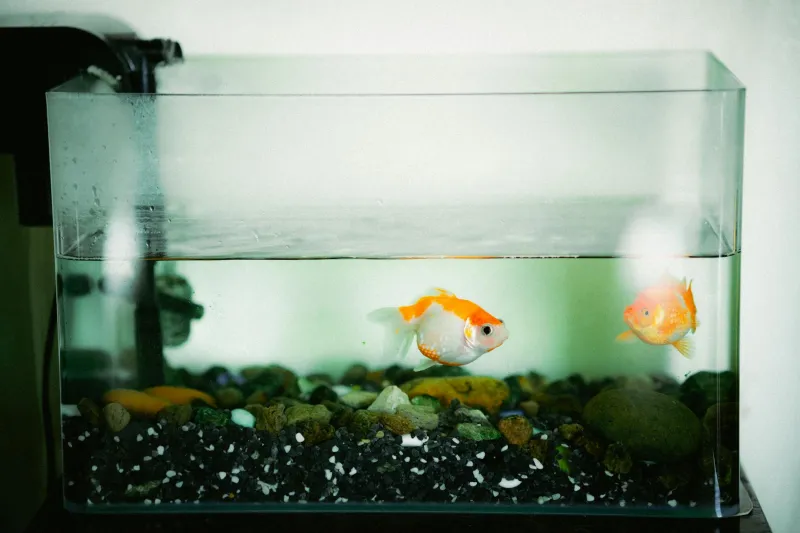
The Myth That Refuses to Die
Mention goldfish in any conversation, and someone will inevitably bring up their "three-second memory." It's become the go-to metaphor for forgetfulness, the punchline for attention span jokes, and the justification for keeping fish in tiny bowls. There's just one problem: it's completely false, and scientists have known this for decades.
The goldfish memory myth has achieved something remarkable in our information age — it's become more widespread and entrenched even as evidence against it has piled up. Researchers have documented goldfish remembering feeding schedules for months, learning to navigate complex mazes, and even distinguishing between different human faces. Yet the three-second "fact" continues to spread faster than any correction.
What Fish Can Actually Do (And It's Impressive)
In 2003, researchers at Plymouth University trained goldfish to push a ball into a goal — essentially fish soccer. The goldfish not only learned the task but remembered it weeks later. Other studies have shown goldfish can be trained to swim through hoops, distinguish between different colors and shapes, and respond to various musical tones.
 Photo: Plymouth University, via fcbsassetserver.azurewebsites.net
Dr. Culum Brown, a fish cognition researcher at Macquarie University, has documented goldfish retaining learned behaviors for at least three months — the length of his longest studies. "The three-second memory myth is not only wrong, it's off by a factor of millions," Brown notes. "These are complex animals with sophisticated behavioral repertoires."
 Photo: Macquarie University, via image.shutterstock.com
More recent research has pushed the boundaries even further. Goldfish have demonstrated spatial memory, remembering the locations of food sources and obstacles in their environment. They can learn time-based patterns, anticipating feeding schedules with remarkable accuracy. Some studies suggest they can even engage in basic social learning, watching other fish solve problems and then applying those solutions themselves.
How a Myth Becomes "Common Knowledge"
So where did the three-second memory claim come from? Unlike many scientific myths, this one doesn't seem to have a clear origin point. It appears to have emerged gradually, possibly as an exaggerated simplification of early research suggesting that fish had limited cognitive abilities compared to mammals.
The myth gained traction because it fit perfectly into several cultural narratives. It justified keeping goldfish in small, unstimulating environments ("they won't remember being bored"). It provided an easy metaphor for human forgetfulness. And it reinforced the comfortable assumption that fish are simple, unfeeling creatures that don't require much consideration.
The Internet Effect: How Myths Go Viral
What's particularly fascinating about the goldfish memory myth is how it has thrived in the digital age. Social media platforms reward quick, shareable "facts" over nuanced explanations. A tweet claiming "goldfish have 3-second memories" gets retweeted thousands of times, while a research paper documenting complex fish cognition reaches a few hundred scientists.
The myth has also been reinforced by its own usefulness as a metaphor. Comedians use it for jokes about short attention spans. Marketers reference it when discussing consumer behavior. Teachers use it to illustrate points about memory and learning. Each usage strengthens the myth's cultural foothold, regardless of its scientific accuracy.
Why Debunking Doesn't Always Work
Researchers have been publishing papers on fish cognition for over two decades, yet the three-second memory myth remains stubbornly persistent. This illustrates a broader problem with how scientific information spreads in popular culture. Correcting a widely believed myth often requires more effort and attention than most people are willing to invest.
There's also a psychological phenomenon at work: once we've accepted a "fact," we tend to interpret new information in ways that confirm what we already believe. When someone hears that goldfish can learn complex behaviors, they might assume it's a special case or that the researchers made an error, rather than questioning their original assumption.
The Real Story About Fish Intelligence
The truth about goldfish cognition is actually more interesting than the myth. These aren't simple biological machines responding to basic stimuli — they're animals with individual personalities, learning capabilities, and complex behaviors. Goldfish can recognize their owners, show preferences for different types of enrichment, and even demonstrate what researchers cautiously call "emotional" responses to various situations.
This doesn't mean goldfish are as cognitively complex as mammals, but it does suggest that our understanding of animal intelligence has been limited by our assumptions rather than evidence. The more researchers study fish cognition, the more sophisticated these animals appear to be.
Rethinking What We "Know"
The goldfish memory myth serves as a perfect case study in how supposed facts can become disconnected from actual evidence. It reminds us that some of our most confident assumptions about the world might be based on outdated information, oversimplifications, or pure speculation that somehow got elevated to the status of common knowledge.
The next time someone mentions goldfish having three-second memories, you can share the real story: these are animals capable of learning, remembering, and adapting in ways that would have surprised researchers just a generation ago. It's a small correction, but it points to a larger truth about how much we still have to learn about the world around us.