Scientists Actually Tested the Five-Second Rule — And the Results Will Change How You Think About Dropped Food
Scientists Actually Tested the Five-Second Rule — And the Results Will Change How You Think About Dropped Food
Every American kid learns it. Drop a piece of food on the floor, and if you snatch it up within five seconds, it's still safe to eat. The "five-second rule" feels like universal wisdom — quick enough to beat the germs, slow enough to be realistic. It's the kind of practical knowledge that gets passed down through generations, from parent to child, with the confidence of scientific fact.
But here's what's fascinating: until recently, nobody had actually tested whether this childhood rule held up under real laboratory conditions.
What Happens When Scientists Drop Food on Purpose
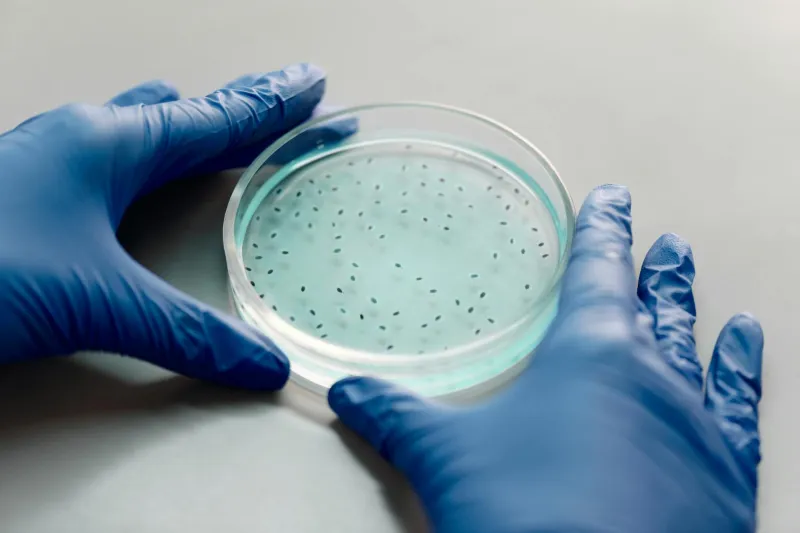
In 2016, researchers at Rutgers University decided to put the five-second rule through rigorous scientific testing. They contaminated various surfaces with Enterobacter aerogenes, a harmless bacteria that behaves similarly to dangerous pathogens like Salmonella. Then they dropped different types of food — watermelon, bread, buttered bread, and gummy candy — onto these surfaces for varying amounts of time.
The results were more complicated than anyone expected.
Bacteria transfer happened almost instantly. Within less than one second, contamination occurred on all food types. But here's where it gets interesting: the amount of contamination varied dramatically based on factors that have nothing to do with time.
Surface Type Matters More Than Speed
The researchers discovered that what you drop food onto matters far more than how quickly you pick it up. Stainless steel and tile surfaces transferred bacteria much more readily than carpet. This makes intuitive sense — smooth, hard surfaces provide better contact between food and germs, while carpet fibers create barriers.
But even more surprising was how food moisture played a role. Wet foods like watermelon picked up bacteria much faster than dry foods like gummy candy. The moisture created a bridge that allowed bacteria to transfer more efficiently.
The Rule That Never Had Rules
The five-second rule's origin story is murky. Unlike many health myths that can be traced to specific studies or historical events, this one seems to have emerged from collective wishful thinking. Food safety experts have never endorsed any version of a "time-based safety rule" for dropped food.
The rule persists because it offers a appealing compromise between food safety and food waste. Nobody wants to throw away a perfectly good piece of toast, but nobody wants food poisoning either. Five seconds feels like a reasonable middle ground — long enough to react, short enough to matter.
What Food Scientists Actually Recommend
Food safety researchers are clear about their recommendations: if food touches a potentially contaminated surface, don't eat it. Period. The risk isn't worth it, especially since bacterial contamination happens immediately upon contact.
But they also acknowledge that context matters in the real world. A piece of fruit that falls on your clean kitchen counter poses different risks than food that hits a public restroom floor. The problem with the five-second rule isn't just that it's scientifically wrong — it's that it treats all situations as identical when they're not.
Why We Keep Believing in Time-Based Safety
The five-second rule taps into something deeper than food safety logic. It reflects our desire for simple, actionable rules that help us navigate uncertainty. Time feels measurable and controllable in a way that bacterial contamination doesn't.
This pattern shows up everywhere in how Americans think about health and safety. We love rules that feel scientific but are actually just convenient shortcuts. The five-second rule joins a long list of "common sense" health practices that sound reasonable but lack scientific foundation.
The Real Story About Dropped Food
When Rutgers researchers published their findings, they weren't trying to ruin childhood memories or create food paranoia. They were demonstrating that real food safety is more nuanced than catchy rules suggest.
The truth is that bacterial contamination happens immediately, but the actual health risk depends on numerous factors: what type of surface, what kind of food, how contaminated the environment is, and your own immune system. A five-second countdown doesn't capture any of this complexity.
What This Means for Your Kitchen
The research doesn't mean you need to panic about every dropped morsel. Instead, it suggests making decisions based on actual risk factors rather than arbitrary time limits. Consider the surface, consider the food, consider the environment. A piece of dry cereal that bounces off your clean kitchen floor is different from a wet sandwich that lands on a subway platform.
The five-second rule gave us the illusion of scientific precision where none existed. The real story is messier but more honest: food safety depends on context, not countdowns. Sometimes the most practical wisdom is admitting that simple rules can't capture complicated realities.