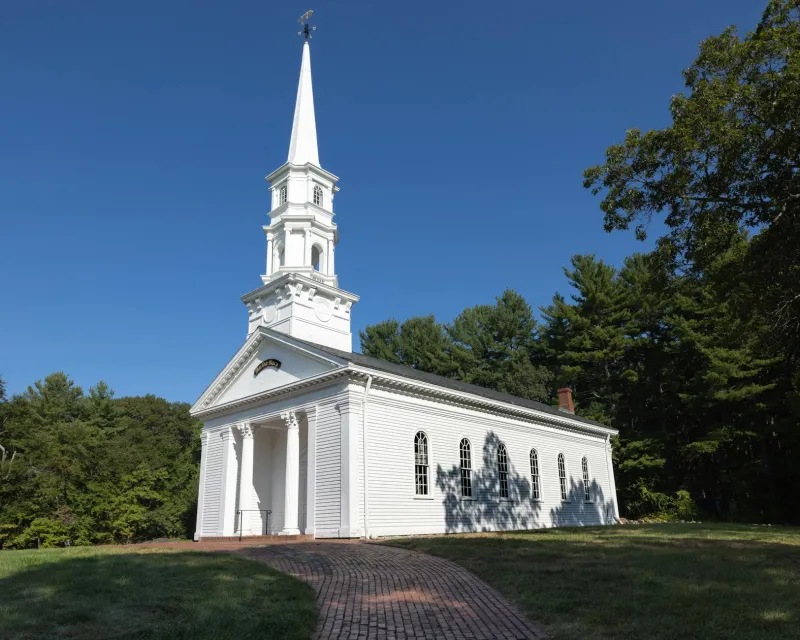
Picture this: it's 1760, and a massive thunderstorm rolls across colonial Boston. Lightning strikes the tall wooden steeple of a prominent church, setting it ablaze and killing several people inside. Meanwhile, across town, a building equipped with Benjamin Franklin's new lightning rod system sits untouched, its metal conductor safely channeling the electrical charge into the ground.
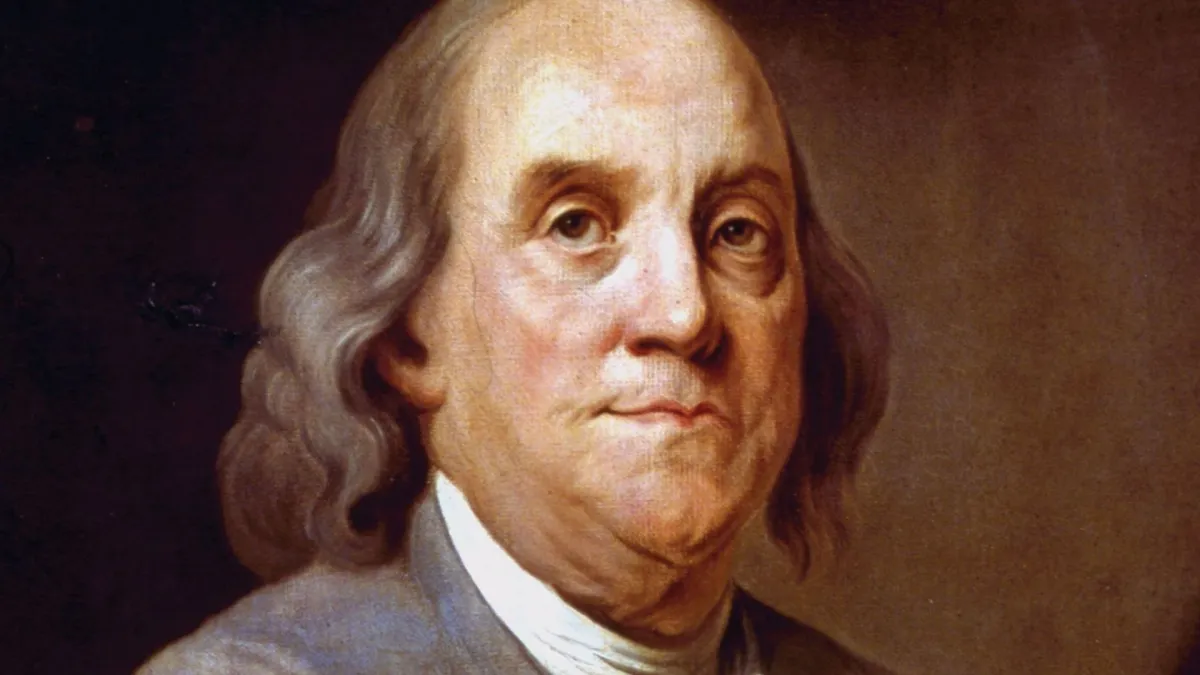 Photo: Benjamin Franklin, via cdn.britannica.com
You'd think this would be a pretty compelling argument for installing lightning rods on every church in America. Instead, many religious leaders doubled down on their opposition, arguing that protecting houses of worship from lightning was tantamount to interfering with God's judgment.
Franklin's Simple but Revolutionary Idea
Franklin's lightning rod was elegantly simple: a pointed metal rod installed at the highest point of a building, connected by wire to a metal plate buried in the ground. When lightning struck, the electrical charge would follow the path of least resistance down the rod and harmlessly disperse into the earth.
The science was sound, and Franklin had tested it extensively. But when he proposed that churches — the tallest structures in most colonial towns — should be the first to install these protective devices, he ran headlong into a theological wall.
The Divine Wrath Theory
Many 18th-century religious leaders operated from a worldview where natural disasters were direct expressions of God's displeasure. Lightning strikes weren't random meteorological events; they were targeted divine interventions. If God chose to strike a particular building with lightning, the thinking went, then humans had no business interfering with that judgment.
Reverend Thomas Prince of Boston's Old South Church was particularly vocal in his opposition. After a 1755 earthquake damaged his church, he argued that the recent installation of lightning rods in the area had actually angered God further by "presuming to control the artillery of heaven."
 Photo: Reverend Thomas Prince, via dq5pwpg1q8ru0.cloudfront.net
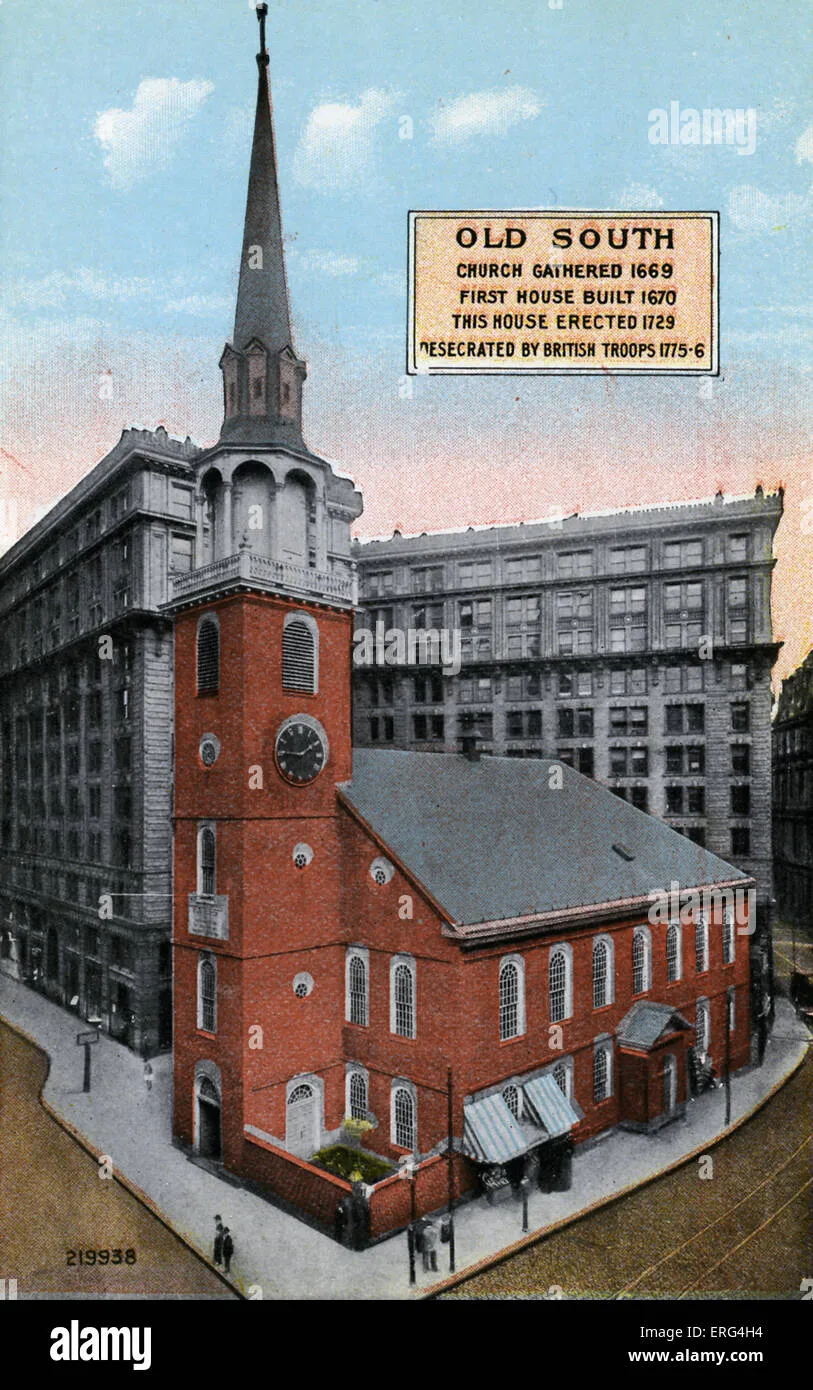 Photo: Boston's Old South Church, via c8.alamy.com
This wasn't just theological hair-splitting. Prince and others genuinely believed that attempting to redirect lightning was a form of blasphemy that could bring even worse divine retribution.
The Irony of Unprotected Steeples
The theological opposition to lightning rods created a darkly ironic situation. Churches, with their tall wooden steeples reaching toward the heavens, were natural lightning magnets. They were exactly the buildings that most needed Franklin's protection.
Yet these same structures often went unprotected for decades because their congregations viewed the technology as spiritually dangerous. Church after church burned down in lightning strikes that could have been easily prevented.
Meanwhile, secular buildings, private homes, and even some government structures began adopting lightning rods almost immediately. The technology worked exactly as Franklin had predicted, providing clear, measurable protection against lightning damage.
When Theology Met Reality
The turning point came gradually, as the evidence became impossible to ignore. Insurance companies began offering lower rates for buildings with lightning rods. Merchants and ship owners, whose livelihoods depended on protecting their property, installed the devices without hesitation.
More tellingly, churches with lightning rods stopped burning down, while unprotected ones continued to suffer devastating strikes.
Some progressive religious leaders began reframing the issue. Instead of viewing lightning rods as interference with divine will, they argued that God had given humans the intelligence to protect themselves — and failing to use that intelligence might itself be sinful.
The Slow Conversion
By the 1780s, the theological opposition was crumbling under the weight of practical results. Even many previously resistant churches began quietly installing lightning rods, often without making public announcements that might upset traditionalist members.
The process wasn't uniform, though. Rural churches, often more conservative and with less access to new ideas, held out longer than their urban counterparts. Some congregations split over the issue, with progressive members leaving to form new churches that embraced the technology.
A Pattern That Sounds Familiar
The lightning rod controversy established a pattern that would repeat throughout American history: a useful technology emerges, religious authorities declare it contrary to divine will, practical benefits become undeniable, and eventually the technology is accepted and even embraced.
It happened with anesthesia during childbirth (opposed because the Bible said women should give birth in pain), with vaccines (opposed because preventing disease meant interfering with God's plan), and with countless other medical and technological advances.
Franklin's Lasting Victory
Today, lightning rods are so common and accepted that most people don't give them a second thought. Churches routinely install them alongside other safety equipment, and no one considers this religiously problematic.
Franklin's invention saved countless lives and prevented immeasurable property damage. But perhaps more importantly, the lightning rod controversy helped establish the principle that practical human welfare should take precedence over abstract theological concerns.
The next time you see a church steeple topped with a lightning rod, remember that it represents more than just fire prevention. It's a small monument to the eventual triumph of evidence over ideology, and a reminder that even the most entrenched religious opposition to scientific progress eventually gives way to demonstrable results.
Franklin would probably be amused to know that his simple metal rod sparked a theological revolution almost as significant as the electrical one.