A Japanese Pedometer Ad From 1965 Quietly Became America's Fitness Standard
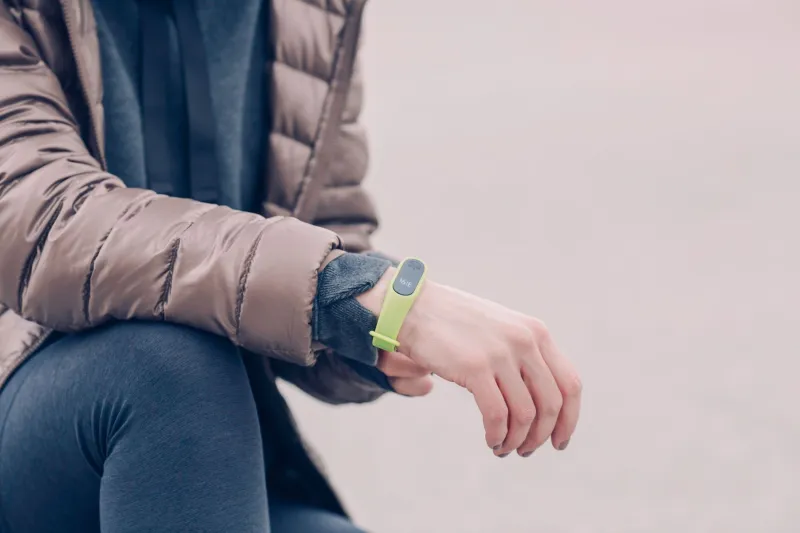
If you've ever watched your phone's step count tick toward 10,000 with the focus of someone defusing a bomb, you're not alone. Millions of Americans treat that number like a daily health requirement — something handed down from exercise scientists and cardiologists. The reality is a little more awkward than that.
The 10,000-step target didn't emerge from a clinical trial. It came from a product name.
The Walking Device That Started It All
In 1965, a Japanese company called Yamasa Clock released a pedometer ahead of the Tokyo Olympics. They called it the Manpo-kei — which translates, almost too perfectly, to "10,000 steps meter." The name was a marketing choice, not a medical recommendation. Ten thousand is a satisfying, round number. It looks good on packaging. It creates a clear goal for consumers.
The device sold well. The concept spread. And somewhere along the way, a catchy product name got laundered into health gospel.
By the time fitness trackers became mainstream in the United States — think early Fitbit era, around 2009 to 2015 — the 10,000-step default was already baked into the software. Most users never questioned it. Why would they? It was right there on the screen, delivered with the same confidence as a blood pressure reading.
What the Research Actually Found
Scientists eventually got around to testing whether 10,000 steps was actually the magic number — and the results were more nuanced than the marketing ever suggested.
A widely cited 2019 study published in JAMA Internal Medicine followed over 16,000 older women and found that health benefits — specifically, reduced mortality risk — increased steadily up to around 7,500 steps per day. After that point, the gains leveled off. The researchers found no meaningful additional benefit from pushing to 10,000.
A separate 2021 study in JAMA Network Open looked at a broader age range and found similar patterns: significant benefits kicked in well before the 10,000-step threshold, often around 6,000 to 8,000 steps depending on age and baseline fitness level.
None of this means walking more is bad for you. It just means the specific number was never scientifically derived in the first place.
Why the Number Stuck
There's a psychological reason round numbers become cultural standards. Ten thousand feels complete in a way that 7,340 simply doesn't. Goals need to be memorable to be useful, and "somewhere between 6,000 and 8,500 steps depending on your age, cardiovascular history, and activity baseline" is not going on a fitness tracker dashboard anytime soon.
The 10,000-step rule also arrived at the right cultural moment. The American wellness industry was expanding rapidly through the 1990s and 2000s, and wearable tech needed a simple hook to drive engagement. A single daily number — one that felt ambitious but achievable — was exactly the kind of feature that made early fitness trackers feel worth buying.
Once the number was embedded in consumer technology used by tens of millions of people, it effectively became a health recommendation through repetition alone. Doctors started hearing patients mention it. Health writers repeated it. It became one of those facts that feels too established to question.
What Your Body Actually Needs
The honest answer is that consistent movement matters far more than hitting a specific daily count. Research on cardiovascular health consistently points to a few key factors: regularity, intensity, and breaking up long periods of sitting — none of which require exactly 10,000 steps.
The American Heart Association recommends at least 150 minutes of moderate-intensity aerobic activity per week, or 75 minutes of vigorous activity. That translates to roughly 30 minutes of brisk walking five days a week — which, depending on your stride, might land you somewhere between 3,000 and 4,000 steps per session. Not 10,000.
There's also growing research on what exercise scientists call "exercise snacks" — short bursts of movement spread throughout the day rather than one concentrated block. A few minutes of brisk walking after meals, for example, has been shown to meaningfully improve blood sugar regulation and cardiovascular markers. Your body isn't counting steps. It's responding to movement, effort, and consistency.
The Takeaway
None of this means you should abandon your step count entirely. If 10,000 steps motivates you to move more than you otherwise would, that's a genuinely good outcome — the number just isn't a medical prescription. Research suggests most adults see real health benefits well before that threshold, and that how you move matters as much as how much.
The next time your tracker buzzes at 9,800 steps and you start pacing your kitchen to close the ring, it's worth remembering: you're not chasing science. You're chasing a 60-year-old Japanese marketing slogan — and it's been doing its job ever since.